A cheesecake can go wrong in a dozen small ways and look perfectly fine the whole time. It’s only when you cut into it — and then taste it — that you find out whether someone actually cared. Here’s what we pay attention to when we make ours, and what to look for next time you order a slice anywhere.
It starts with the cheese
There’s no hiding behind a good crust or a clever topping. If the cream cheese is cheap and watery, the whole thing tastes flat and slightly sour, with that chalky aftertaste you can’t quite place. Full-fat cream cheese, brought to room temperature before it goes anywhere near the bowl, is the single biggest difference between a cheesecake that tastes rich and one that tastes like a compromise.
We use the same logic across everything we bake — real butter in the cookies, proper chocolate, ingredients we’d happily eat on their own. Cheesecake by Cookie Beacon is no different. If it wouldn’t taste good as a spoonful straight from the bowl, it won’t taste good baked.
Texture is the whole game
Ask anyone about a cheesecake they loved and they’ll describe the texture before the flavour. Dense and fudgy, or light and almost mousse-like — both can be brilliant, but a cheesecake that can’t decide is the one nobody finishes.
Three things wreck texture more than any others:
- Cold ingredients. Cold cream cheese never fully smooths out, and you end up beating it harder to compensate — which leads straight to the next problem.
- Too much air. Overmixing whips air into the batter. That air expands in the oven, the cake puffs up dramatically, and then it sinks and cracks as it cools. Mix on low, just until smooth, and stop.
- A rushed cool-down. Cheesecake hates a temperature shock. A slow cool — oven off, door cracked — keeps the top from splitting.
Baked, no-bake, or Basque?
People say “cheesecake” as if it’s one dessert. It’s at least three.
Baked
The classic. A water bath, a low steady oven, and a long gentle cool give you that smooth, custardy set that holds a clean edge when you slice it. It takes patience more than skill — the oven does most of the work if you don’t rush it.
No-bake
Set with cream and a little gelatine rather than eggs and heat, no-bake cheesecake is lighter, softer and more about the freshness of the dairy than any caramelisation. There’s nowhere to hide a weak ingredient here, so it lives or dies on quality.
Basque
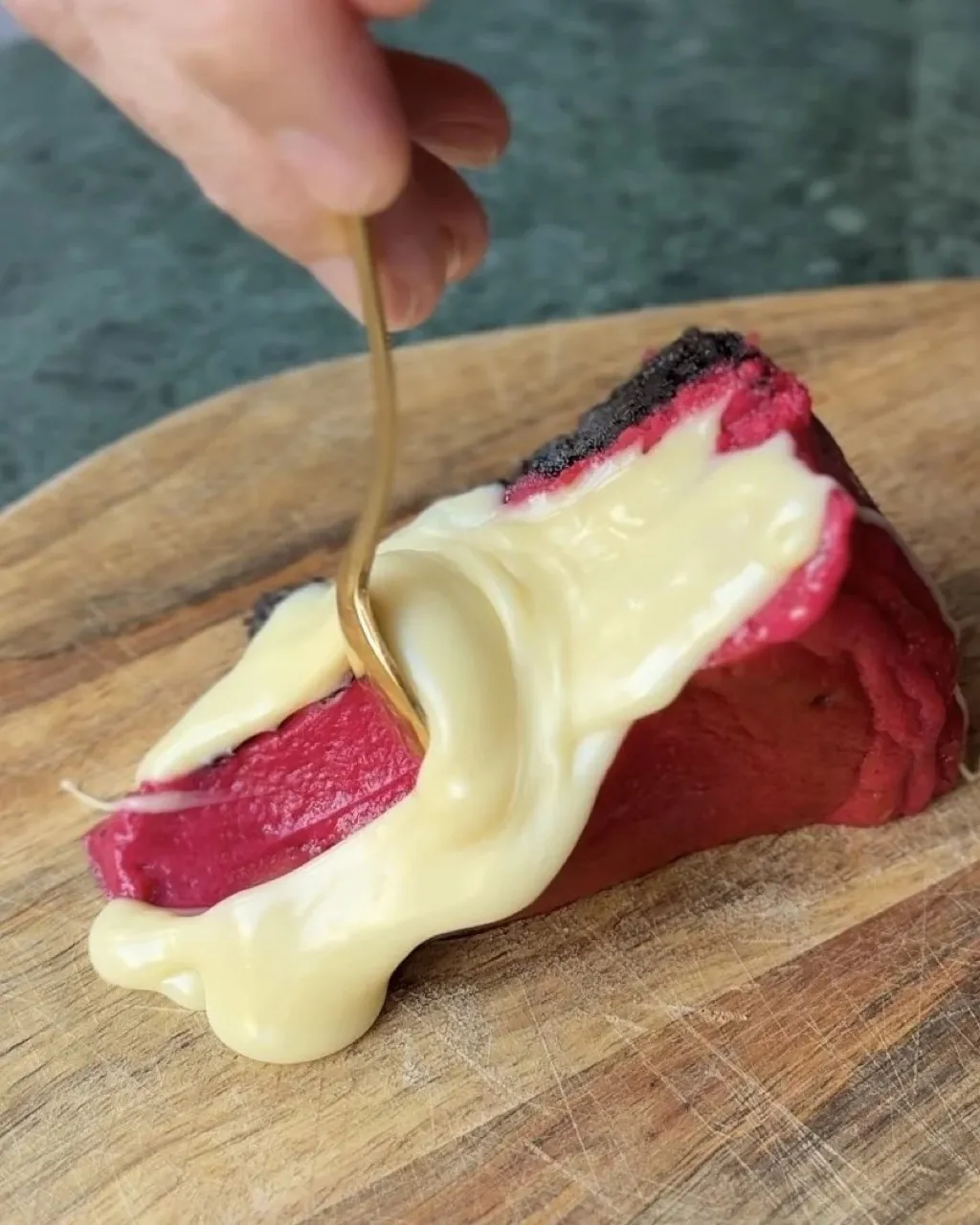
Our favourite. The Basque (or “burnt”) cheesecake is baked hot and fast with no crust, so the top scorches to a deep bronze while the middle stays loose and almost spoonable. It’s meant to crack. It’s meant to look a little wild. Caramelised edge, creamy centre, faint bitterness against all that richness — when it’s done right, it’s hard to beat.
What to look for in a good slice
- A clean cut that holds its shape but still looks soft, not rubbery.
- A real edge of vanilla or citrus or caramel — not just sweetness.
- No grainy, claggy mouthfeel. That’s usually overbaking or low-fat cheese.
- A finish that makes you want a second forkful straight away.
Come try it
Cheesecake by Cookie Beacon is rolling out across our brunch spots now, baked in-house alongside the chunky cookies — so if you’re in Budapest near St. Stephen’s Basilica, in Bucharest by Piața Romană, or in Belgrade’s old town, come find a slice. Walk-ins only, no reservations. We believe in handmade, and cheesecake is a very good place to prove it.